

Platelet Rich Plasma: A patient’s guide
What is PRP?
PRP stands for Platelet-Rich Plasma — a concentrated solution made from your own blood that is used to support healing in injured tendons, muscles, ligaments, and joints. Because it comes from your own body, there is no risk of rejection or allergic reaction to a foreign substance.
What are platelets?
Platelets are tiny cells in your blood whose main job is to respond when tissue is damaged. When you get a cut, platelets rush to the area and release proteins called growth factors — signaling molecules that tell your body to begin repairing itself. PRP therapy takes advantage of this natural process by delivering a much higher concentration of these growth factors directly to the area that needs healing.
Who may benefit from PRP?
PRP is most often used for conditions where tissue has been slow to heal on its own, including:
Chronic tendon problems (such as tennis elbow, Achilles tendinopathy, or rotator cuff issues)
Knee osteoarthritis and joint pain
Partial ligament tears
Plantar fasciitis
Adhesive capsulitis (frozen shoulder)
It is not a guaranteed cure, and results vary from person to person. Your provider will discuss whether your specific condition and health history make you a good candidate.
What to expect
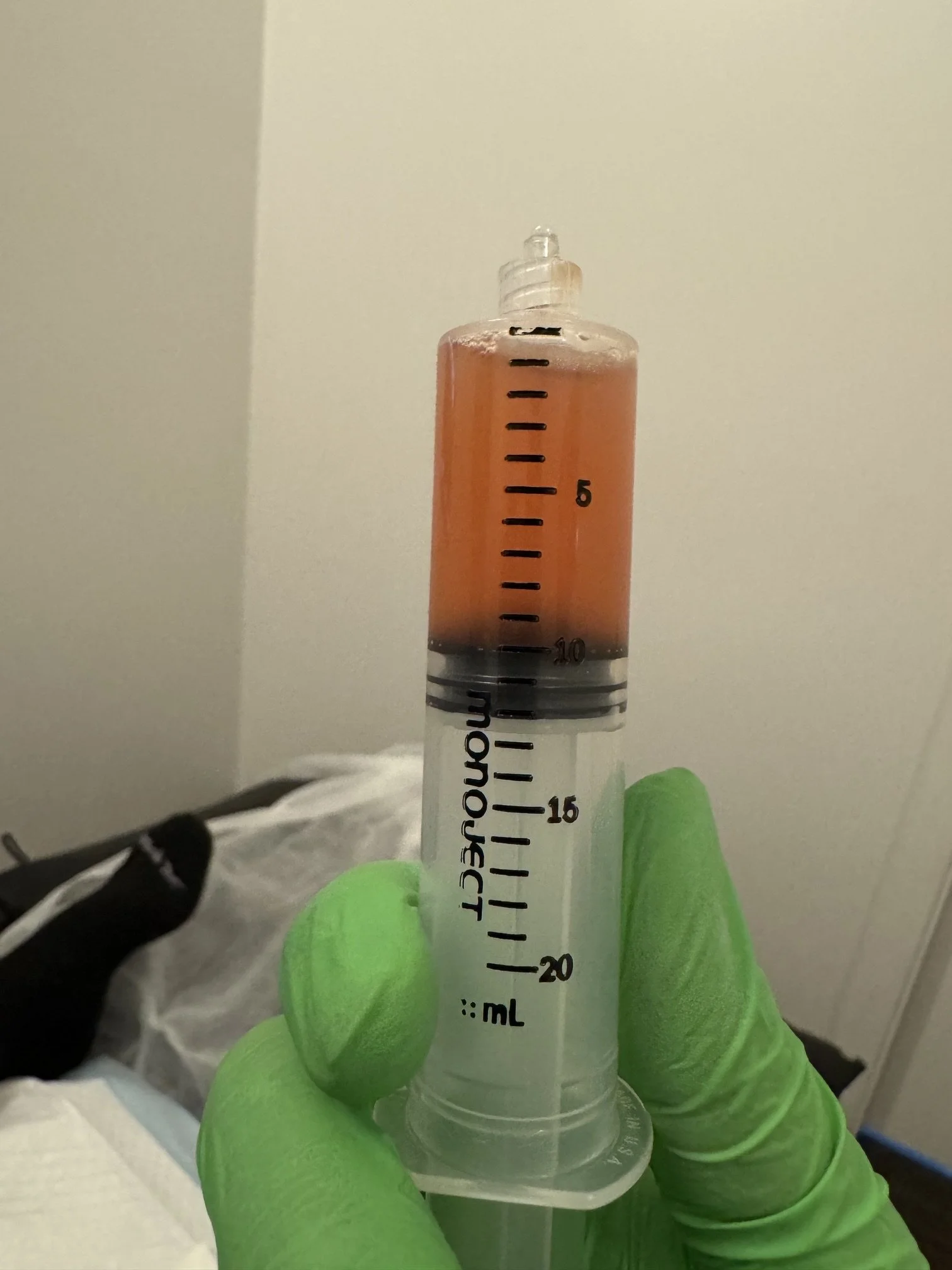
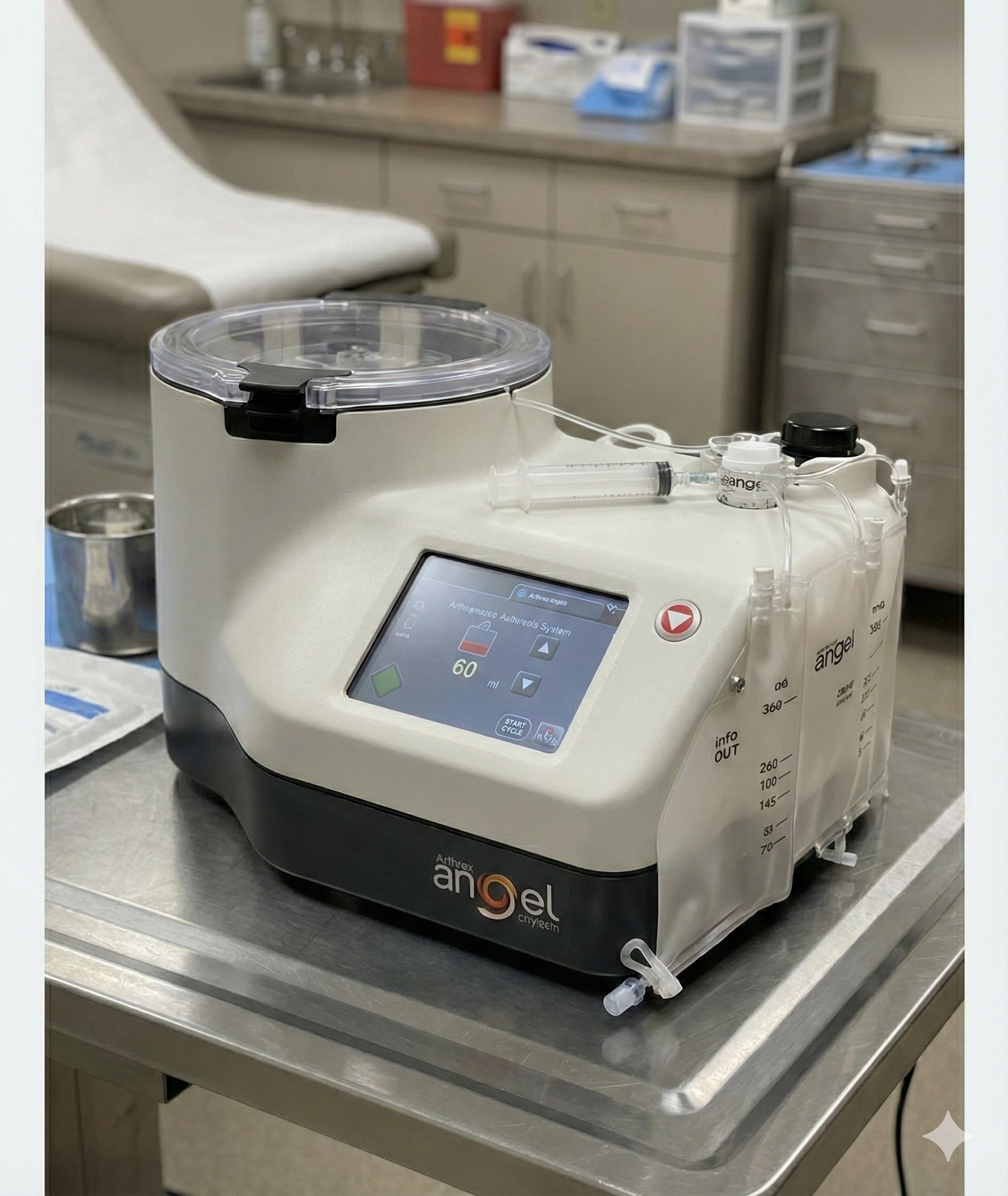
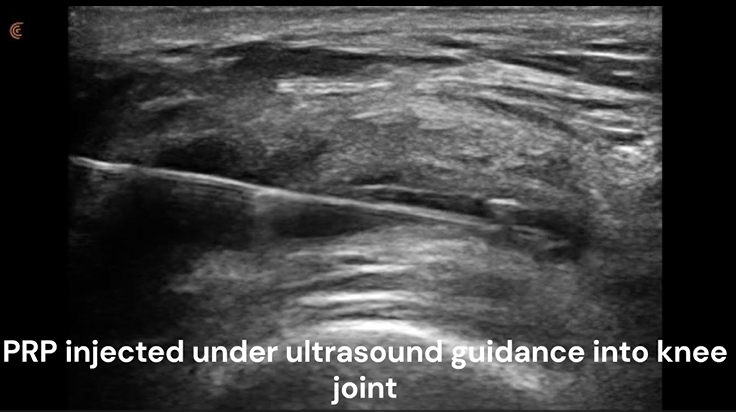
The entire process happens in a single office visit and typically takes 30–45 minutes. A small amount of blood is drawn from your arm, placed in a centrifuge machine that spins it at high speed to separate and concentrate the platelet-rich layer, and then the resulting PRP solution is injected — usually with ultrasound guidance — precisely into the affected area.
Most patients experience mild soreness at the injection site for a few days afterward. This is normal and reflects the healing response being activated. Your provider will give you specific instructions about activity restrictions during the recovery period.
How long until I feel better?
PRP works by triggering your body's own repair processes, which take time. Many patients begin to notice improvement within 4–8 weeks, with continued progress over 3–6 months. Some conditions respond well after a single treatment; others may benefit from a series of injections.
Is PRP right for me?
PRP is generally considered when more conservative treatments — such as physical therapy, anti-inflammatory medications, and rest — have not provided sufficient relief. Talk with your provider about your treatment history, goals, and what the research currently says about PRP for your specific condition. PRP may not be the best fit for individuals with conditions that require the ongoing use of blood thinners or who have certain conditions that predispose them to low platelet levels.
What to expect after a PRP injection
Patients can expect a temporary increase in pain after a PRP injection that lasts between 3-5 days on average. For many, the sustained relief associated with a PRP injection does not occur all at once. Unlike a steroid injection which provides rapid but temporary relief of pain by shutting down inflammation, PRP modulates the inflammatory process over weeks to months, with many patients experiencing notable improvements in both pain and function at 3 months post-injection, with benefit sometimes persisting beyond 12 months.
What to Expect After Your PRP Injection
Generalized recovery milestones from injection day through six months — select your treatment area below for personalized guidance.