

Dextrose prolotherapy
What is Prolotherapy?
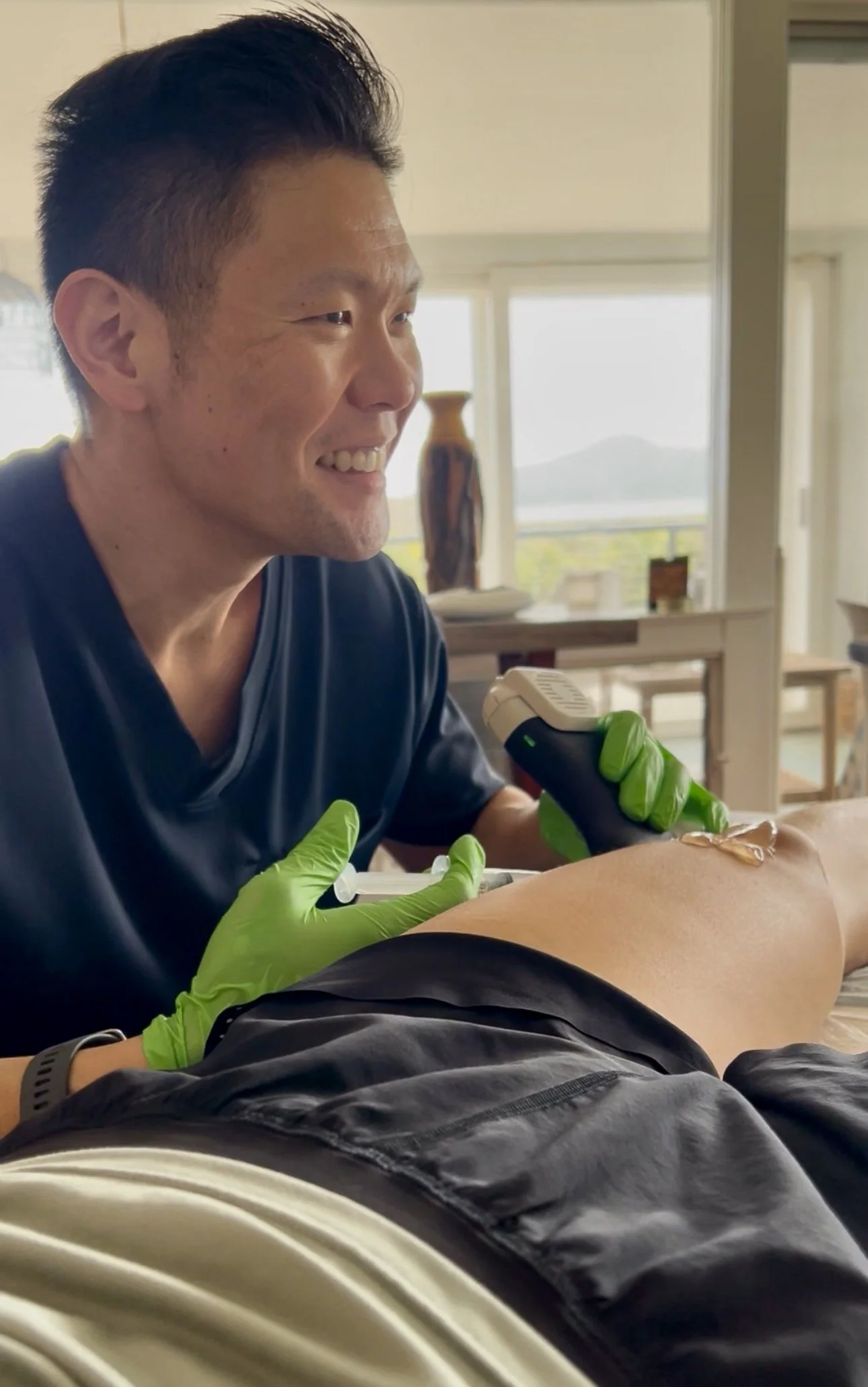
Prolotherapy (short for "proliferative therapy") is an injection-based treatment that uses a dextrose (sugar water) solution to stimulate your body's natural healing response. When injected into an injured ligament, tendon, or joint, the solution triggers a mild inflammatory reaction that prompts your body to lay down new connective tissue — effectively "tightening" or strengthening the area over time. Treatment typically involves a series of injections spaced 4–6 weeks apart.
Conditions & What the Evidence Shows
Knee Osteoarthritis Several randomized controlled trials have shown dextrose prolotherapy reduces pain and improves function in patients with mild-to-moderate knee osteoarthritis. Patients typically receive injections into the joint space and surrounding ligaments. Benefits appear to be sustained at 12-month follow-up in multiple studies, and it compares favorably to saline or exercise alone.
Lateral Epicondylitis (Tennis Elbow) Prolotherapy targeting the lateral epicondyle and common extensor tendon has shown meaningful pain reduction and grip strength improvement in randomized trials. It may outperform corticosteroid injections at long-term follow-up (12+ months), as steroids tend to weaken tendon tissue over time.
Rotator Cuff Syndrome / Shoulder Pain Evidence supports prolotherapy for chronic shoulder pain related to rotator cuff tendinopathy and supraspinatus tears. Studies demonstrate improvement in pain scores, shoulder function, and quality of life, particularly in patients who have not responded to physical therapy alone.
IT Band Syndrome Prolotherapy has been studied for chronic IT band syndrome in runners with persistent lateral knee pain. Injection along the iliotibial band and lateral retinaculum has shown promising results in pilot studies, helping patients return to activity when other conservative measures have failed.
Joint Laxity (Ligament Hypermobility) This is one of prolotherapy's most established original indications. Dextrose injections strengthen loose or hypermobile ligaments — particularly in the knee, ankle, and spine — by stimulating collagen formation. Patients with hypermobility may find significant benefit.
How Prolotherapy Fits into the Treatment Ladder:
Prolotherapy occupies a specific and important niche — it sits after conservative care has been given a fair trial, but before more aggressive or irreversible options like surgery. The interactive diagram below illustrates this framework.
Treatment ladder for chronic musculoskeletal conditions showing where prolotherapy fits
Treatment pathway for chronic MSK pain
Tap any step to learn more. Most patients progress in order — prolotherapy typically follows a fair trial of physical therapy.
Side-by-side comparison
This information is for educational purposes. Treatment decisions should be made with your provider based on your specific diagnosis, imaging, and goals.
What to expect after a prolotherapy injection
Prolotherapy involves the use of a dextrose injection (sugar water) to stimulate a mild inflammatory reaction in the targeted tissue. For this reason, patients can often expect a temporary increase in pain for the first 2-3 days after an injection, with return to baseline threafter. Following treatment, heavy activity should be avoided for roughly 2 weeks, as the healing process needs to be given adequate time.
Because prolotherapy is most effective after 3-6 consecutive injections, spaced two to four weeks apart, it generally takes longer for patients to see improvement compared to PRP.
The benefit of prolotherapy, similar to PRP, is that many patients see long-term improvements in pain and function at 6 months. And unlike steroid, treatment with prolotherapy can be repeated as needed without the risk of damage to the affected joint, tendons or ligaments.
What to Expect After Prolotherapy
Recovery milestones from your first injection through 6 months — select your treatment area for personalized guidance on the injection series and healing process.